
Prefer to read? The full note, with linked sources, is below.
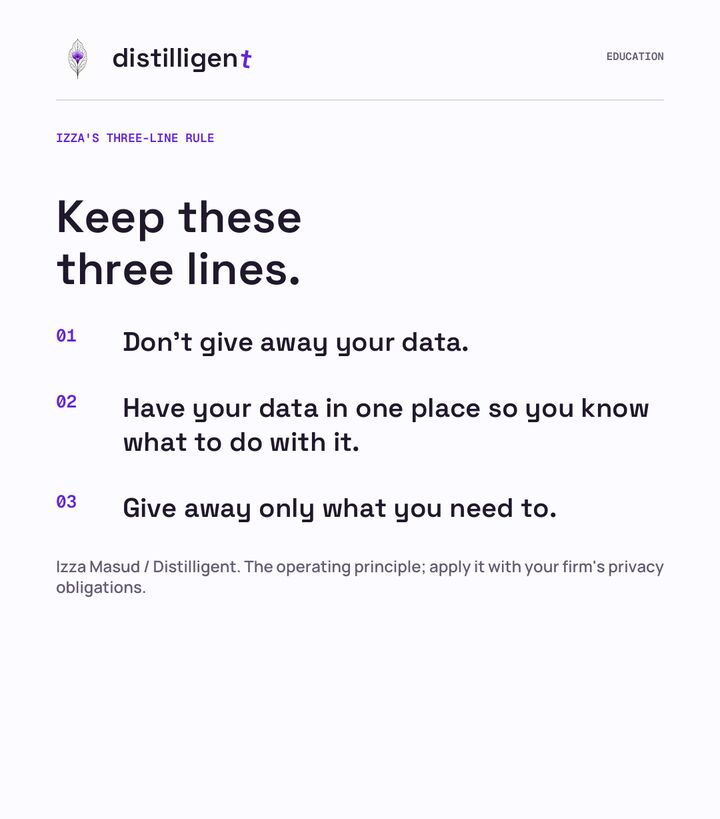
Keep these three lines
- Don’t give away your data.
- Have your data in one place, so you know what to do with it.
- Give away only what you need to.
This is Izza Masud’s operating rule at Distilligent. Apply it alongside your firm’s own privacy obligations.
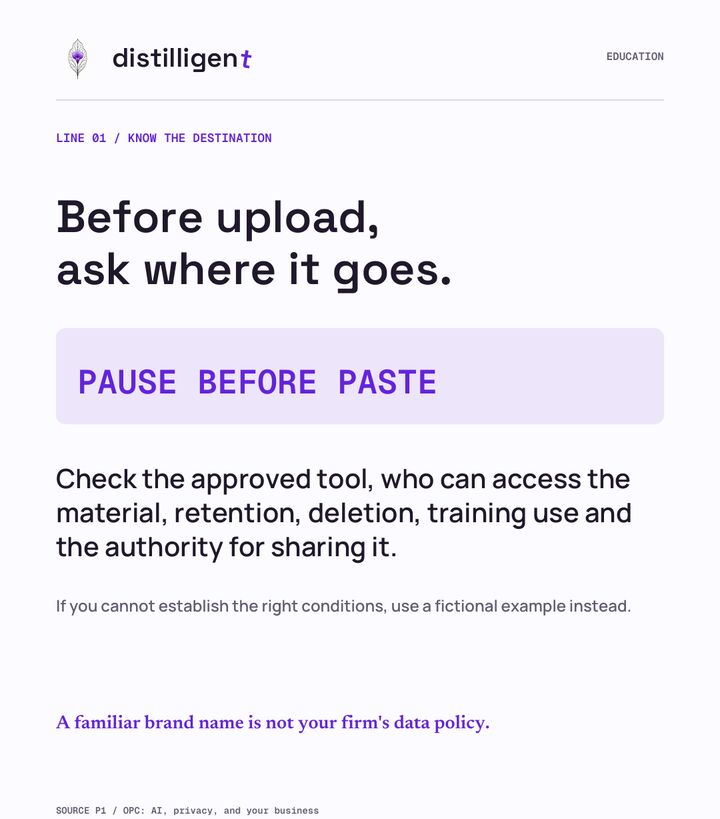
1 · Know the destination
Before you upload anything, ask where it goes.
Pause before you paste. Check that the tool is approved, who can access the material, how long it is kept, how it is deleted, whether it is used for training, and whether you have the authority to share it at all. If you cannot establish those conditions, use a fictional example instead.
A familiar brand name is not your firm’s data policy.
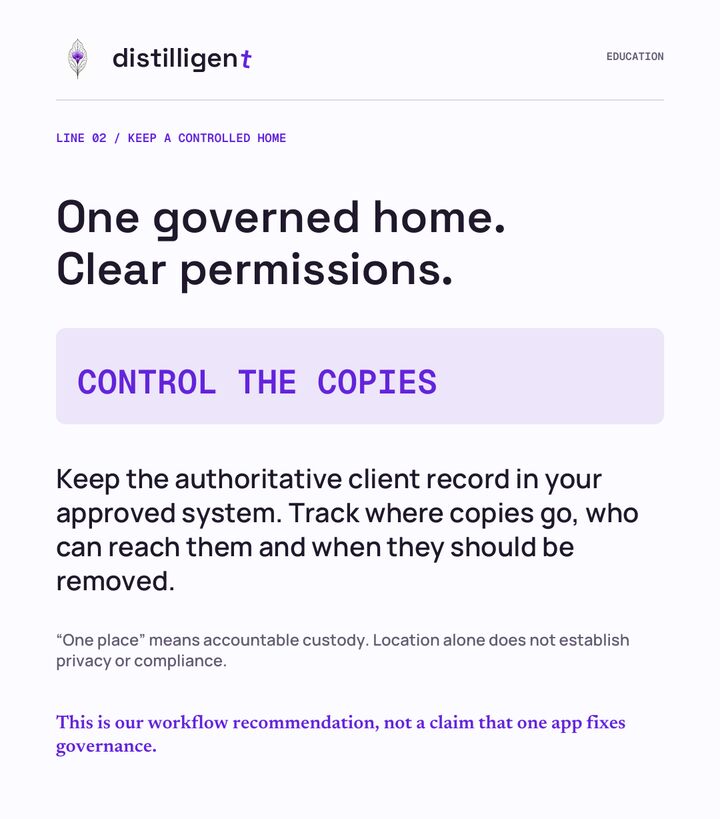
2 · Keep a controlled home
One governed home. Clear permissions.
Keep the authoritative client record in your approved system. Track where copies go, who can reach them, and when they should be removed.
“One place” means accountable custody. A location alone does not make anything private or compliant, and this is a workflow recommendation, not a claim that any one app fixes governance.
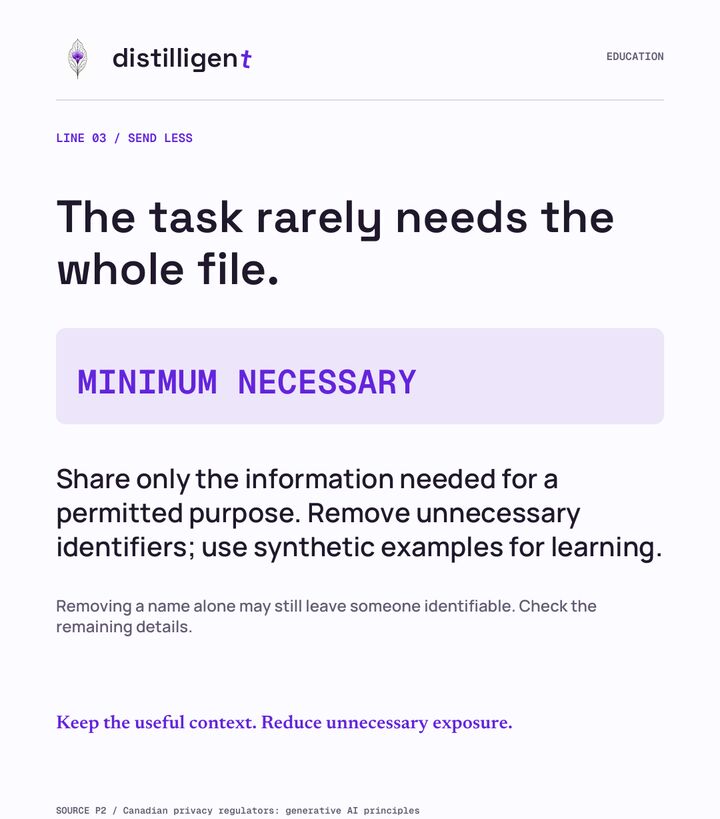
3 · Send less
The task rarely needs the whole file.
Share only the information a permitted purpose actually needs. Remove identifiers you don’t need, and use synthetic examples when you are learning. Removing a name alone may still leave someone identifiable, so check what remains.
Keep the useful context. Cut the unnecessary exposure.
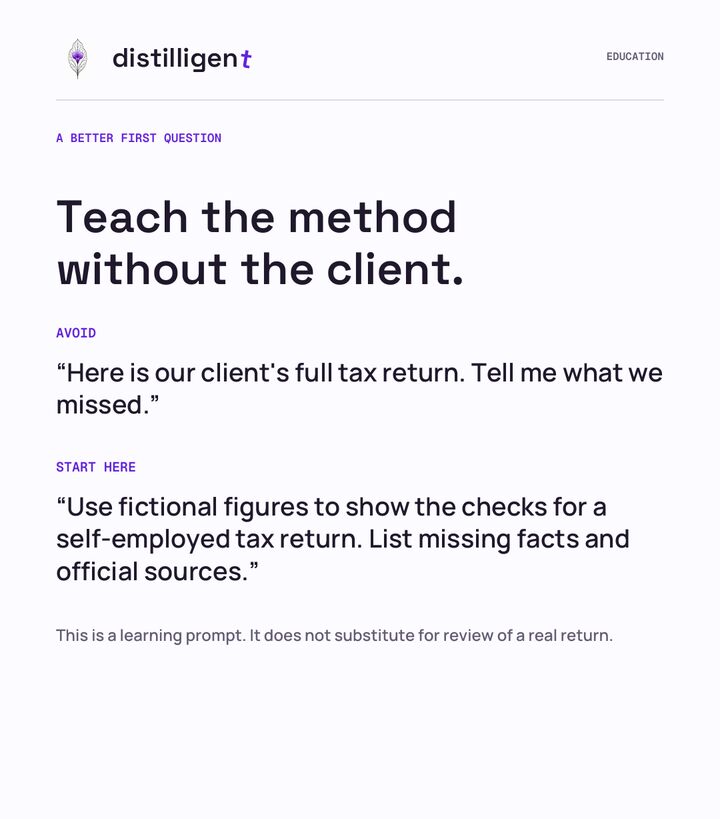
A better first question
Teach the method without the client.
That is a learning prompt. It does not replace review of a real return.
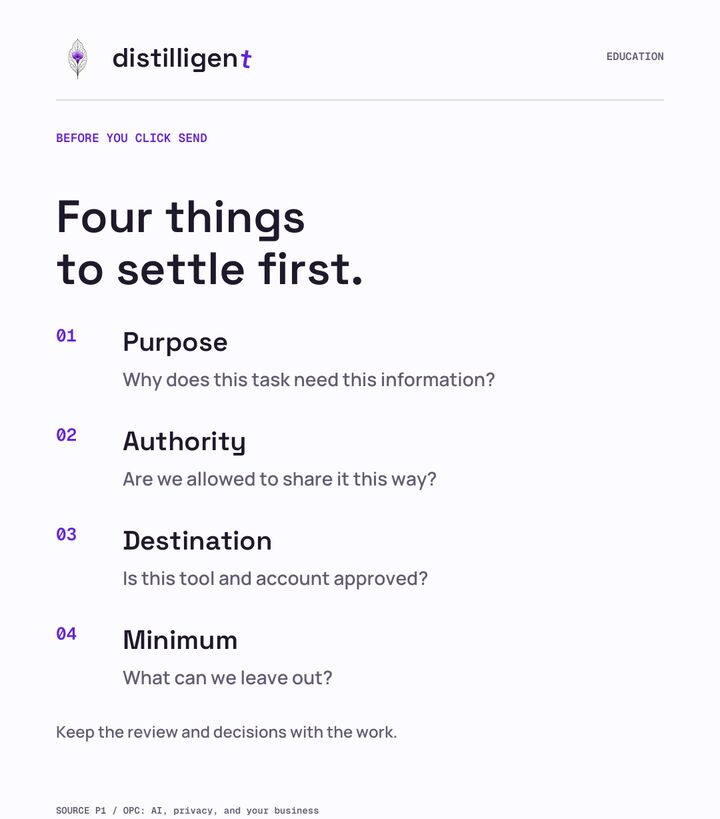
Before you click send
Settle four things first.
Keep the review and the decisions with the work.
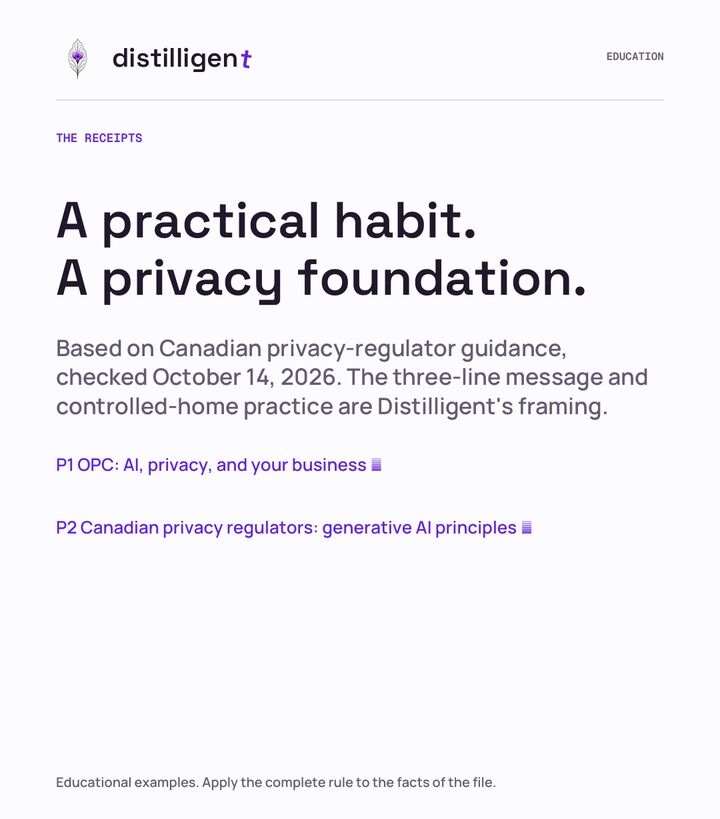
Sources
Based on Canadian privacy-regulator guidance, checked October 14, 2026. The three lines and the controlled-home practice are Distilligent’s framing. These are educational examples: apply the complete rule to the facts of each file.
Your knowledge stays yours. Build the habit.
Practical AI training for Canadian accounting professionals. Explore professional training